The Private Salon Architecture and Table Physics
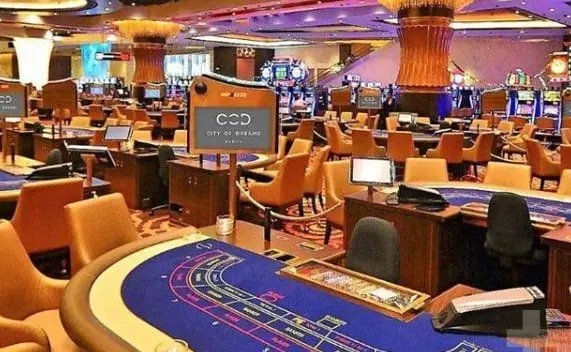
Walking into a genuine US High Roller Baccarat salon is nothing like the velvet-rope theater most casinos sell to tourists. The real private VIP salon operates on a completely different hardware and protocol stack. The shoe alone tells you everything — these are not standard eight-deck shufflers. High-limit salons run precision-calibrated machines with firmware locked to specific cut-card depths, and the pit manager knows the exact penetration percentage before a single card leaves the chute. If you have not audited the shuffler model and its cut-card setting, you are already playing blind.
The table itself is a controlled environment. Squeeze rules, commission structure, and the dealing mechanic are all negotiable variables inside a private salon, and that is where the edge lives. A standard commission baccarat table taxes every Banker win at five percent. A high-roller room can move that to a negotiated rebate, or shift you into a no-commission variant where the Banker win on a six pays fifty percent. That single structural tweak changes the house edge by nearly a full point. 🎯

The Shoe Penetration and Shuffle Mechanics
Here is the mechanical truth most players never grasp: penetration depth is the single most underrated variable in the entire game. A six-deck shoe cut at seventy-five percent gives a card counter roughly four and a half decks of usable information. Cut it at fifty percent and the same mathematical model collapses. Private salons routinely advertise "deep penetration" as a luxury perk, but deep penetration is a double-edged sword — it amplifies both the counter's edge and the variance. The house knows this. That is why premium salons deploy continuous-shuffle machines in the highest-limit pits, stripping the shuffle-tracking advantage entirely. 🃏
When you request a manual shuffle, you are asking for information transparency. When the salon grants it, they are either confident in their shuffle randomization or they have set a cut-card depth that neutralizes any tracking model. Always ask for the shuffle procedure in writing before you sit. A Private VIP Salon that hesitates on this question is running a shuffle protocol they do not want scrutinized.
Commission Structures and the Real House Edge
Do the math on the three standard variants before you ever wire a deposit. Commission baccarat carries a house edge of 1.06 percent on Banker and 1.24 percent on Player. The no-commission variant looks friendlier but hides a 1.46 percent edge on Banker due to the six-win tax. EZ baccarat pushes the Banker edge down to 1.02 percent by taxing only three-card sevens. That quarter-point difference compounds brutally across a million-dollar session. High-roller rebates can shave another fraction off, but only if you negotiate the rebate against actual handle, not against theoretical loss. Never accept a comp package that masks the true edge.
Salon Access, Credit Lines, and Settlement Terms
Private salon access is not a marketing gimmick — it is a credit and settlement structure. The front-money requirement, the marker authorization process, and the settlement window are all part of the operating protocol. A genuine high-limit room will extend a credit line against verified liquidity, settle in chips or wire within a fixed window, and disclose the table limits in writing. If the salon cannot produce a clear marker agreement and a settlement timeline, the "VIP" label is cosmetic. Demand the credit terms, the table minimum-maximum spread, and the dealing mechanic documentation before the first hand is dealt. The real edge in US High Roller Baccarat is structural, and it is only visible to players who read the protocol before they sit down.